
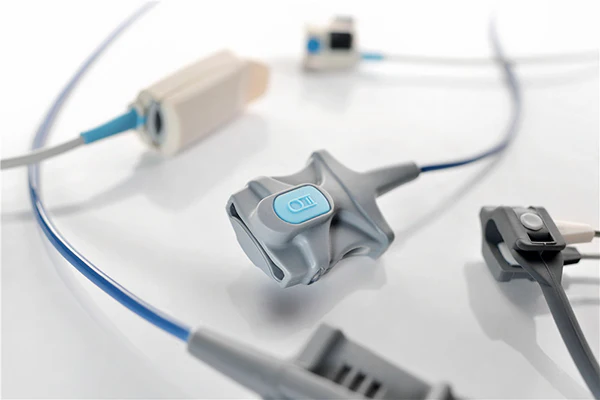
Poor signal quality in blood oxygen saturation sensor readings can slow clinical workflow and increase the need for rechecking patients. For biomedical teams and device integrators using a Nellcor SpO2 sensor configuration, understanding how the sensor communicates with the monitor is essential. Unimed provides SpO2 sensors and interface cables that support broad compatibility with patient monitors, helping teams maintain consistent monitoring of SpO2 and pulse signals.
Common Causes of Weak or Noisy Readings
Several factors can affect the performance of a blood oxygen saturation sensor. First, sensor placement and fit can limit light transmission. If the finger, toe, or hand clip does not sit correctly, the photodetector may capture insufficient signal. Second, patient motion can shift the sensor position, producing intermittent waveform patterns. Third, low perfusion, such as during cold conditions or peripheral vasoconstriction, can reduce pulse amplitude, making the signal harder to distinguish from noise.
Environmental and handling factors matter as well. Dirty sensor surfaces, residues from cleaning procedures, or damaged cable insulation can degrade signal stability. In setups that rely on an interface cable, loose connections or incorrect connector type can also lead to poor signal quality.
Practical Troubleshooting Steps
Start with the patient and the sensor. Reposition the Nellcor SpO2 sensor using the correct application site and confirm that the sensor is secure without excessive pressure. If available, switch to a different sensor size for neonatal, pediatric, or adult use to improve optical alignment. Check the patient for motion, tremors, or shaking, then allow time for stabilization.
Next, inspect the cable path and connectors. Ensure the interface cable is properly seated and free from kinks near the strain-relief area. If the sensor or cable shows signs of wear, replace it to prevent intermittent contact. Clean the sensor according to the facility’s procedure and allow appropriate drying time when required.
When to Escalate
If repositioning and inspection do not restore signal quality, verify the monitor channel settings and consider changing to a known-good sensor and cable set. Document what changed, including placement adjustments and any patient condition updates, to support effective troubleshooting.
Conclusion
Troubleshooting poor signal quality in a blood oxygen saturation sensor is usually a combination of correct placement, minimizing motion, ensuring adequate perfusion, and confirming cable and connector integrity. With compatible SpO2 sensor and interface solutions from Unimed, clinical teams can improve monitoring consistency for Nellcor SpO2 sensor applications across diverse patient populations.