
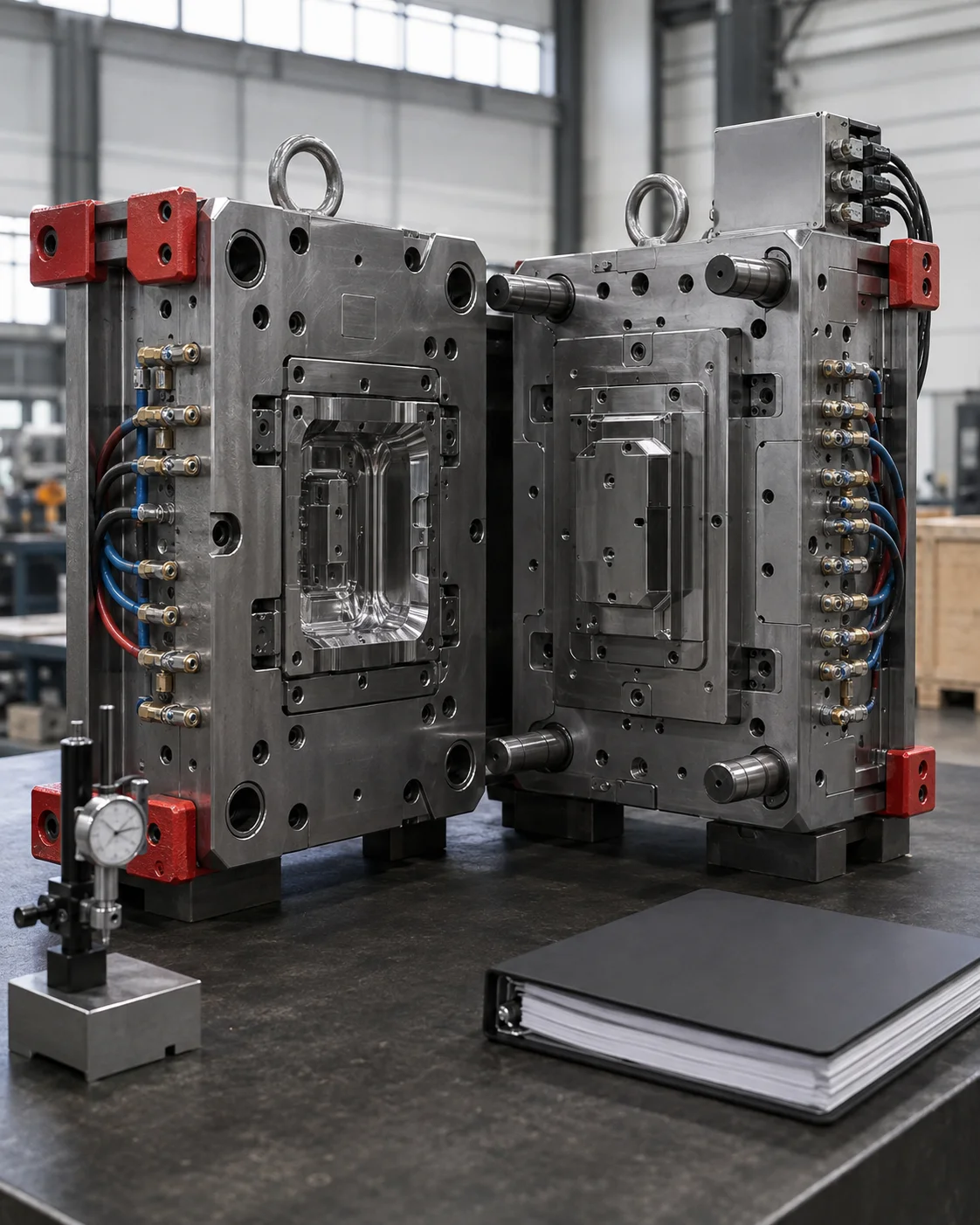
Choosing the right plastic resin is just as important as selecting the right tooling material. When aluminum rapid tooling is used for injection molding, resin compatibility affects tool life, molding performance, surface quality, dimensional stability, and the reliability of molded parts.
Aluminum rapid tooling is well suited to many production grade thermoplastics, making it useful for prototype validation, functional testing, low volume production, and early market evaluation. However, not every resin places the same demands on the mold. Understanding how different materials interact with aluminum tooling can help manufacturers select a practical process and avoid unnecessary tooling limitations.
Common Resins for Aluminum Rapid Tooling
A broad range of engineering and commodity plastics can be processed with aluminum rapid tooling. HordRT’s rapid tooling service lists production grade materials including ABS, PP, PE, PC, PA, POM, PMMA, PBT, TPE, and TPU, giving product teams flexibility when selecting a resin that matches the intended application.
ABS is frequently selected for housings, covers, consumer products, and functional prototypes because it offers a useful balance of strength, impact resistance, and processability. PP is another practical option, particularly for lightweight components, living hinges, containers, and products requiring chemical resistance.
PE can also be considered when low friction, moisture resistance, and chemical resistance are important. Depending on the specific grade, its molding behavior and shrinkage should be considered during mold design.
For applications requiring greater stiffness and temperature resistance, PC, PA, POM, and PBT may be appropriate. These engineering plastics are commonly used for structural components, mechanical parts, connectors, and functional housings where ordinary commodity plastics may not provide sufficient performance.
Engineering Plastics Require More Process Control
Not all engineering resins behave the same way during injection molding. PC, PA, POM, and PBT can introduce additional considerations related to processing temperature, shrinkage, moisture, dimensional stability, and mold design.
PA, for example, can absorb moisture, which may affect processing and the final dimensions or mechanical properties of molded parts. Proper material preparation and drying procedures therefore matter.
POM provides useful mechanical properties and low friction, but processing conditions need to be carefully controlled. PC generally requires higher processing temperatures than materials such as PP or ABS, placing greater demands on the molding process.
PBT can provide dimensional stability and electrical performance for applications such as connectors and electronic components, but the selected grade and processing conditions should be reviewed before tooling.
The practical approach is to evaluate the resin and aluminum tool together rather than assuming that one tooling specification will work equally well for every material.
PMMA, TPE, and TPU for Appearance and Flexibility
Some applications prioritize appearance, transparency, softness, or flexibility rather than structural strength.
PMMA is often selected for transparent or visually important components. When using aluminum rapid tooling for PMMA parts, cavity surface quality becomes particularly important because polishing and surface reproduction can have a direct effect on the appearance of the finished component.
TPE and TPU are useful when flexibility, elasticity, or soft touch characteristics are required. They can be used for grips, seals, protective components, wearable products, and other applications where rigid plastics are unsuitable.
For these materials, mold design should account for material flow, part removal, draft, and potential deformation during ejection. A suitable aluminum rapid tooling process can support these applications, but the mold must be designed around the specific resin and part geometry.
What About Glass Filled and Abrasive Materials?
Fiber reinforced plastics require additional evaluation.
Glass filled nylon and other reinforced resins can provide higher stiffness, strength, and dimensional stability, but the glass fibers can also increase wear on tooling surfaces. The effect becomes more important as production volume increases.
This does not automatically rule out aluminum rapid tooling. Instead, it means that mold life, expected shot count, material grade, cavity geometry, and surface requirements should be evaluated before selecting the tooling material.
HordRT’s rapid tooling approach considers factors such as material, mold life, part geometry, and production requirements when determining an appropriate tooling solution. This helps prevent a common mistake: selecting a resin based only on part performance without considering how that resin affects the tooling process.
High Temperature Resins Need Careful Evaluation
High temperature plastics can place substantially different demands on rapid tooling than standard thermoplastics.
The molding temperature, mold temperature, cooling requirements, shrinkage behavior, and expected tool life all need to be considered. Aluminum’s thermal conductivity can be advantageous for heat transfer, but the suitability of an aluminum tool still depends on the specific resin, processing window, geometry, and required production quantity.
For demanding materials or applications requiring extended mold life, a different tooling material may be more appropriate. HordRT supports rapid tooling with both aluminum and pre hardened steel options, allowing the tooling strategy to be matched to project requirements rather than forcing every application into the same solution.
Match the Resin to the Tooling Strategy
The best material for aluminum rapid tooling is not necessarily the resin with the lowest processing temperature or the easiest molding characteristics. It is the material that meets the product’s functional and appearance requirements while remaining compatible with the expected tooling life and production conditions.
A useful selection process starts with the final application. Consider mechanical strength, flexibility, impact resistance, chemical exposure, temperature, appearance, dimensional requirements, and expected production volume. The resin grade should then be evaluated alongside mold geometry, cooling design, surface finish, and tooling material.
HordRT supports this process through DFM analysis, mold design, CNC machining, EDM, mold assembly, T1 sampling, and inspection. Its rapid tooling service can move from engineering review to molded samples within a relatively short development cycle, helping teams evaluate the actual resin and tooling combination rather than relying entirely on theoretical assumptions.
From Material Selection to Reliable Molded Parts
Aluminum rapid tooling can accommodate a wide range of production grade plastics, from ABS and PP to PC, PA, POM, PMMA, PBT, TPE, and TPU. The right choice depends on more than resin availability. Processing temperature, shrinkage, reinforcement, surface requirements, mold life, and production quantity all influence whether aluminum is an appropriate tooling solution.
For standard thermoplastics and many engineering materials, aluminum rapid tooling can provide an efficient route to functional and production representative parts. For high temperature, highly abrasive, or particularly demanding resins, additional engineering evaluation may be necessary.
With DFM support, flexible tooling material options, precision machining, mold trials, and injection molding capabilities, HordRT helps connect resin selection with practical tooling requirements. That integrated approach makes it easier to validate the material, mold, and finished part together before making a larger production commitment.