
Material-handling efficiency depends on more than the weight of a load. Construction contractors, agricultural operators, and industrial site managers must also consider load dimensions, lifting height, forward reach, ground conditions, and the position where materials need to be placed. These factors determine which machine can complete a task safely and efficiently. When evaluating an off-road telehandler, fleet planners should match its rated capacity and operating envelope to actual site requirements rather than relying on maximum capacity alone.
Zoomlion Access offers equipment options for demanding material-handling applications, including the non-rotating ZTH4018 telehandler. Understanding how load size and placement influence machine selection helps purchasing teams assess equipment suitability, plan work sequences, and avoid unnecessary operating constraints.
Match Load Weight to the Required Working Position
A telehandler’s rated capacity is only a starting point for equipment selection. The load chart shows how lifting performance changes as the boom rises or extends. A machine that can handle a heavy pallet close to the chassis may have a substantially lower capacity when placing the same pallet at height or across an obstacle.
For procurement teams, the practical question is whether the machine can lift the heaviest planned load at the exact working position. Material weight should include packaging, pallets, attachments, and any other items carried with the load. This calculation helps prevent a common planning mistake: choosing equipment based solely on its headline capacity.
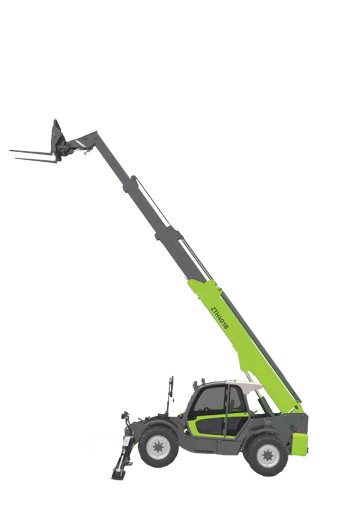
The Zoomlion Access ZTH4018 has a rated capacity of 4,000 kg and a maximum lift height of 17.6 m. Its rated lifting capacity at maximum height is 2,500 kg, while capacity at maximum forward reach is 850 kg. These figures demonstrate why contractors must evaluate the load chart rather than assume the maximum rated capacity applies throughout the working envelope.
Consider Load Dimensions and Center of Gravity
Weight alone cannot determine whether a load is suitable for a telehandler. Long steel sections, oversized timber bundles, bulky equipment, and irregularly shaped materials may shift the load center or restrict the operator’s visibility. Even when the total weight falls within a machine’s rated limits, an unsuitable load arrangement can create handling risks.
Before choosing an off-road telehandler, site planners should record the dimensions, lifting points, center of gravity, and required attachment for each major material category. Fork spacing and length must suit the load, while slings or other lifting accessories should be used only where the machine, attachment, and approved operating procedures permit them.
Load placement also affects control. Materials should be secured against shifting, and operators need a clear view of the travel path and landing area. Where visibility is limited, a designated spotter and an agreed communication procedure can help coordinate movement without exposing personnel to suspended or unstable loads.
Plan for Reach, Height, and Obstructions
Placement requirements often determine machine selection more directly than load weight. A contractor may need to deliver materials over a boundary wall, reach a recessed work area, or place pallets on an upper floor. Each task requires sufficient height and horizontal reach, but the available lifting capacity must still meet the load’s weight at that position.
The ZTH4018 provides a maximum forward reach of 13.4 m. However, maximum reach does not mean the machine can carry its full 4,000 kg rated load at that distance. Its stated capacity at maximum reach is 850 kg, making the load chart essential when planning extended placements.
A telehandler manufacturer can provide model specifications and supporting technical documentation, but contractors should also map the actual delivery point, approach angle, overhead clearance, and possible obstructions. These details help determine whether the selected machine can complete the task from a suitable position without relying on unsafe boom extension or improvised handling methods.
Account for Ground Conditions and Site Access
An equipment plan must consider the route between material storage and the final placement point. Soft soil, uneven surfaces, slopes, confined access lanes, and changing weather can affect travel stability and maneuverability. Contractors should assess ground bearing capacity and verify that the operating area meets the machine’s requirements before moving heavy loads.
The ZTH4018 features hydrostatic drive, frame leveling, and three steering modes: front-wheel, four-wheel, and crab steering. Zoomlion also identifies its off-road performance and gradeability as key characteristics. These features can support maneuverability across varied jobsite conditions, although actual suitability depends on terrain, load, tire conditions, and operating limits.
When comparing an off-road telehandler, fleet managers should therefore evaluate the entire operating route, not just the final lifting point. Adequate clearance, firm travel surfaces, and a suitable setup area can reduce unnecessary repositioning and improve material-handling efficiency.
Coordinate Attachments, Scheduling, and Fleet Costs
Different load types may require different attachments, including forks, buckets, or approved lifting accessories. Selecting the correct configuration affects compatibility, handling, and the machine’s available capacity. Procurement teams should confirm attachment ratings and account for attachment weight when checking the applicable load chart.
A telehandler manufacturer can help buyers identify compatible configurations and understand published operating limits. Zoomlion’s ZTH series supports application-specific attachment options, although availability and compatibility should be confirmed for the selected model and market.
Planning should also account for delivery schedules, storage locations, and the sequence of lifting tasks. Grouping similar placements can reduce unnecessary travel and repositioning. For fleet managers, comparing the cost of one appropriately configured machine against several specialized units requires consideration of utilization, operator requirements, maintenance, and the full range of expected tasks.
Making Telehandler Selection More Precise
Effective telehandler planning starts with the load and ends with the complete placement task. Weight, dimensions, center of gravity, reach, height, ground conditions, and attachment requirements all influence equipment suitability. Evaluating these factors together gives contractors a stronger basis for comparing models and organizing safe, productive material handling.
For businesses considering Zoomlion Access, the ZTH4018 provides a useful reference point for applications requiring substantial lifting capacity and extended reach. Working from verified specifications, the correct load chart, and site-specific assessments allows procurement teams to make informed decisions and align equipment capabilities with real operational demands.