
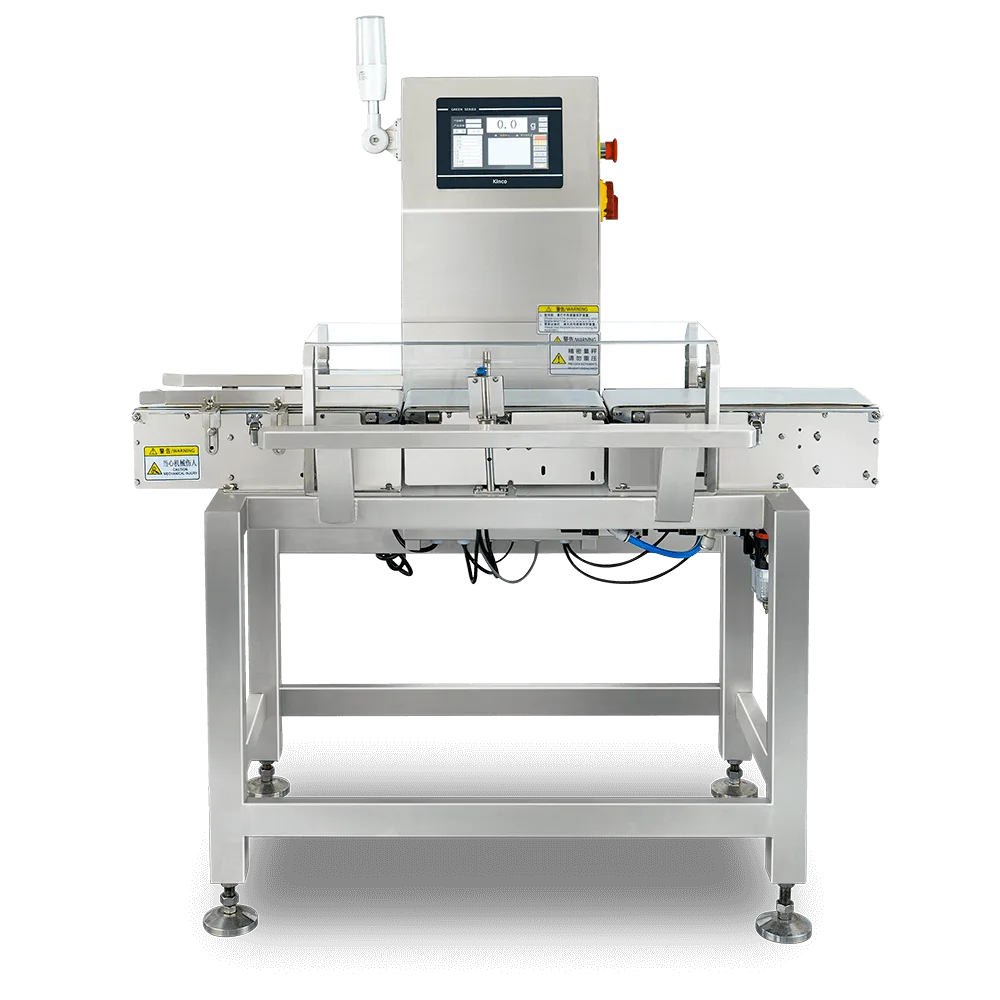
Food manufacturers rarely face a single inspection challenge. Foreign objects may hide beneath a product surface, while incorrect labels, damaged seals, missing components, or visible defects remain exposed to cameras. That distinction makes the choice between food X-Ray inspection equipment and optical inspection less about declaring one approach universally better and more about matching the inspection method to the defect being investigated. Easyweigh combines automated inspection, weighing, grading, and sorting. These capabilities meet varied needs in modern food production.
What Each Inspection Method Actually Sees
X-Ray inspection works through differences in density. Materials that absorb X-Rays differently from surrounding food can create visible contrasts, allowing inspection to identify certain foreign objects even when they are enclosed within packaging.
Vision inspection follows another principle. Cameras capture visible characteristics such as color, shape, position, printing, surface condition, and package appearance. This makes optical inspection particularly useful for defects that can be observed directly without looking through the product.
The distinction becomes clearer with practical examples. Glass fragments inside a sealed pouch may remain invisible to a camera, whereas a misplaced label can be readily identified through image analysis. Each method therefore examines a different layer of product quality.
Where X-Ray Inspection Has an Advantage
Foreign objects are not always located on the surface. Metal, glass, stones, dense plastic, and bone fragments may become embedded within food or hidden beneath packaging materials, creating challenges that surface-based inspection cannot address.
Product structure also influences the usefulness of internal imaging. Meat, seafood, bakery products, confectionery, dairy goods, and prepared meals can contain multiple layers or dense ingredients that obscure contaminants from direct view.
Another consideration is package integrity. Sealed goods can pass through internal inspection without being opened, which is particularly valuable near the finished-product stage. This approach allows contamination checks to take place without exposing packaged food to the surrounding environment.
Where Vision Inspection Performs Better
Surface characteristics tell a different story. Cameras can examine printed information, package alignment, color differences, seal appearance, shape irregularities, and other visible attributes that density-based inspection is not designed to assess.
Label verification is a common example. Incorrect artwork, missing labels, misplaced codes, or unreadable characters can create commercial and regulatory problems even when the food itself contains no foreign material. Optical inspection can focus directly on these visual details.
Packaging defects can also require camera-based assessment. Crushed cartons, abnormal seal positions, missing components, and variations in product presentation may be identified through image comparison. Such applications demonstrate that food quality extends beyond physical contamination alone.
Tailoring Inspection Hardware to Specific Defect Profiles
No two production lines share the same quality risks. One facility may struggle with bone fragments in fish fillets, while another battles misaligned labels on juice bottles. A standard inspection unit rarely addresses both with equal effectiveness. Foodman Vision responds through OEM and ODM cooperation. The X-ray source, detector array, camera resolution, and lighting angle can be selected around the defect that matters most.
On the software side, detection algorithms and user interfaces can be adjusted to match existing control systems. B2B customers gain access to sample testing before purchase, installation guidance, and spare parts programs. When product formats or packaging materials change, the system can be updated rather than replaced. This flexible approach treats inspection as an engineered fit, not a catalog choice.
Why One Method Does Not Replace the Other
Quality control often involves several checkpoints because different defects originate at different stages. Raw-material contamination, processing damage, packaging errors, and labeling problems cannot necessarily be identified through the same inspection principle.
Combining complementary checks can provide broader coverage. Internal inspection can focus on foreign objects, while optical methods examine visible product and package characteristics. Weighing and sorting can add another layer by identifying deviations in mass or product classification.
The appropriate sequence depends on the manufacturing process. Some facilities may inspect ingredients before processing, while others place inspection closer to packaging or dispatch. The important consideration is whether each checkpoint addresses a clearly defined risk and produces useful information for subsequent action.
Selecting the Right Inspection Strategy
A practical comparison begins with the defect itself: is the target hidden or visible, related to density or appearance, located inside the food or on the package? Answers to these questions narrow the field considerably and prevent unnecessary reliance on a single inspection method.
Product composition deserves equal attention. High-density foods, multilayer products, mixed meals, and irregular portions may behave differently during internal imaging, while reflective surfaces, changing illumination, or variable positioning can affect camera-based inspection. Real production samples provide a more useful basis for evaluation than assumptions based only on product categories.
Easyweigh‘s broader portfolio covers X-Ray inspection, metal detection, dynamic checkweighing, and automated sorting, illustrating how food factories may require several forms of automated quality control rather than one universal solution. The choice between internal imaging and visual inspection should therefore follow the specific quality objective, product characteristics, package format, and production workflow.
The comparison becomes clearer once inspection is viewed as a question of what needs to be seen and where the defect exists. Foodman Vision can sit within this wider quality-control concept, while food X-Ray inspection equipment offers particular value when contaminants are concealed inside food or sealed packaging. Vision inspection remains highly relevant for labels, seals, appearance, and other surface conditions, so the strongest strategy depends on matching each inspection method to the evidence that production teams actually need.