
Magnetic components play an important role in power conversion, signal isolation, and energy transfer across many electronic systems. As equipment becomes smaller while power density continues to increase, selecting a qualified magnetic transformer supplier has become part of product development rather than only a purchasing decision.
For B2B manufacturers and design teams, understanding how suppliers approach engineering, production, and application support can reduce development risks and improve long-term product consistency.
Understanding the Engineering Role of a magnetic transformer supplier
A magnetic transformer supplier does much more than manufacture components from existing drawings. In many industrial projects, suppliers participate in magnetic design optimization, material selection, winding arrangement, and thermal evaluation before production begins.
Engineering support is especially valuable when products are intended for power modules, industrial electronics, communication equipment, or renewable energy systems. Small adjustments in winding structure or magnetic core selection may influence efficiency, electromagnetic compatibility, and installation space.
Because every application has different electrical requirements, experienced suppliers normally work with customers during prototype development. This collaborative process helps verify electrical characteristics before products move into larger production volumes.
Why Custom Magnetic Design Matters in B2B Manufacturing
Standard magnetic components satisfy many common applications, but industrial equipment often requires customized specifications. Power ratings, inductance values, mounting methods, operating temperatures, and available board space vary between projects.
Custom development allows manufacturers to balance electrical performance with mechanical constraints. Instead of redesigning an entire circuit around a standard transformer, engineers can optimize the magnetic component to better fit the overall system architecture.
This approach is particularly useful when equipment manufacturers develop differentiated products or upgrade existing platforms without significantly changing PCB layouts or enclosure dimensions.
Product Example for PoE Applications
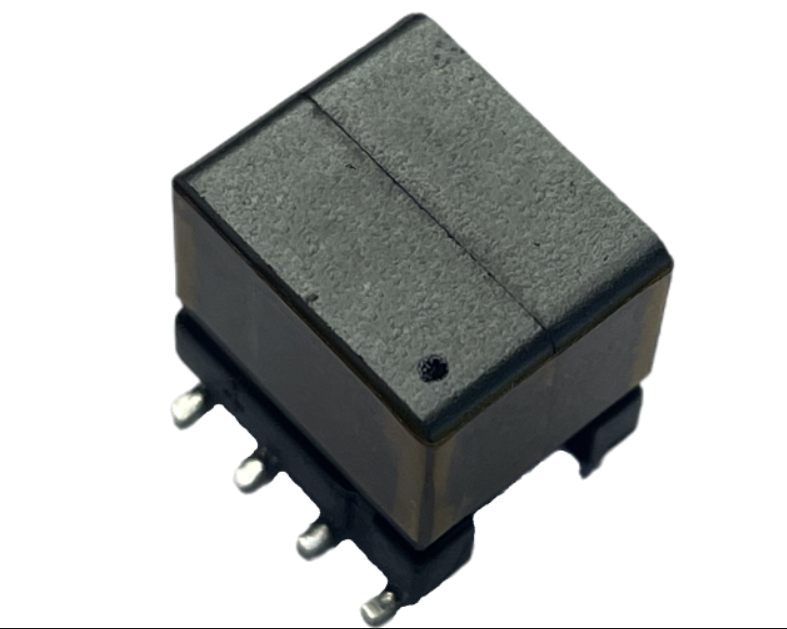
One example that illustrates application-specific magnetic design is the Item Number: EP-524SG. This component is developed for PoE applications where electrical isolation and efficient power transfer are important design considerations.
Its published specifications include dimensions of 13.3 × 10.0 × 9.5 mm, SMT mounting, inductance of 310, power rating of 3, and a turn ratio of 1:0.28:0.7. These parameters provide engineers with defined electrical and mechanical references during circuit development.
Rather than viewing specifications individually, design teams typically evaluate how dimensions, inductance, mounting method, and turn ratio work together within the intended PoE architecture and manufacturing process.
Manufacturing Consistency Beyond Component Specifications
Even when technical specifications are well defined, manufacturing consistency remains a major consideration for OEM and ODM companies. Variations in winding accuracy, insulation processes, magnetic materials, or assembly procedures may affect product performance over time.
Reliable production generally depends on controlled manufacturing processes, repeatable inspection procedures, and stable material management. These factors become increasingly important for projects requiring continuous deliveries across multiple production batches.
Procurement teams therefore often evaluate suppliers based not only on electrical data but also on manufacturing capability, production stability, and engineering communication throughout the project lifecycle.
Different Industries Require Different Magnetic Solutions
Magnetic component requirements differ significantly across industries. Communication equipment focuses on signal integrity and compact installation. Power modules often emphasize efficient energy conversion and thermal management.
New energy applications introduce another layer of complexity. Automotive systems, onboard charging equipment, DC-DC converters, battery management systems, and drive electronics all operate under different electrical conditions and integration requirements.
Solar, storage, and charging systems also require magnetic devices such as common-mode inductors, differential-mode inductors, micro-inverter transformers, and high-power DC-DC transformers. Each application places different demands on electrical isolation, efficiency, and long-term operational stability.
Communication Products Continue to Evolve
Network communication equipment has gradually expanded from traditional networking hardware to higher-bandwidth and higher-power applications. As circuit layouts become denser, magnetic components also continue to evolve toward smaller package sizes and more integrated structures.
Traditional network transformers remain widely used across many communication products, while chip LAN transformers provide additional flexibility for compact electronic designs. Compatibility between newer and conventional solutions can simplify product transitions for equipment manufacturers.
When evaluating long-term supply capability, many engineering teams consider whether suppliers can support both established products and newer magnetic technologies without disrupting ongoing production.
How Mentech Supports Diverse Magnetic Component Requirements
Among manufacturers serving industrial customers, Mentech focuses on customized magnetic component development for multiple application fields. They provide magnetic solutions for power modules, including high-frequency electronic transformers, PFC inductors, common-mode inductors, differential-mode inductors, planar transformers, and molded power inductors.
Their product portfolio also extends into automotive applications with components such as OBC transformers, DC-DC transformers, drive transformers, BMS transformers, and filter inductors designed for new energy projects.
For communication and solar-storage-charging systems, they additionally develop common-mode and differential-mode inductors, micro-inverter transformers, high-power DC-DC transformers, traditional LAN transformers, and chip LAN transformers that remain compatible with conventional networking applications.
Selecting Partners for Long-Term Development
Choosing a supplier is often a long-term engineering decision rather than a single purchasing activity. Technical communication, customization capability, manufacturing consistency, and application knowledge all contribute to project success over multiple product generations.
Many OEM companies therefore evaluate development support alongside production capacity. Early collaboration can shorten design verification cycles while helping engineers identify potential integration issues before large-scale manufacturing begins.
For organizations seeking magnetic component solutions across power modules, communication equipment, renewable energy, or automotive electronics, Mentech provides customized development supported by a broad portfolio of magnetic products, including specialized solutions such as the EP-524SG for PoE applications, allowing B2B customers to match component selection with specific project requirements.