
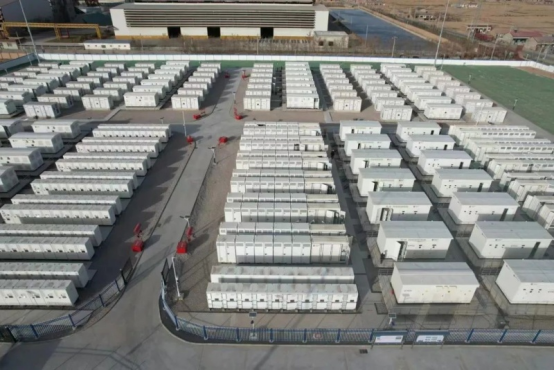
Engineering innovation matters most when it reduces barriers that normally slow large storage projects from design to operation. The subject of How Engineering Innovation Enables Large-Scale Storage Deployment should be read for business-side customers such as grid operators, independent power producers, renewable developers, EPC contractors, and infrastructure investors, because engineering improvements can simplify layout, safety planning, commissioning, and maintenance. HiTHIUM’s storage materials give energy planners a product-based lens for examining reliability, scalability, and operational fit under the commercial conditions linked to deployment innovation. The commercial question behind utility scale battery storage is whether storage can perform the assigned duty with predictable safety, controllability, and support. That is why utility scale battery storage manufacturers should be examined through project evidence rather than treated as a simple marketing label.
System Behavior Under Real Project Loads for Deployment Innovation
For enterprise energy teams, the first useful step is to describe the storage duty before naming equipment sizes or supplier categories under the commercial conditions linked to deployment innovation. For deployment innovation, that duty can involve solar-plus-storage projects, wind smoothing, frequency response, peak shifting, and utility asset operation, while the surrounding constraints may include curtailed renewable power, constrained interconnection, heavy cycling, thermal stress, and control-system mismatch. A technical review of utility scale battery storage can then look at container layout, safety architecture, PCS coordination, EMS logic, capacity retention, service access, and grid-code alignment without turning the article into a checklist that ignores real operating conditions under the commercial conditions linked to deployment innovation. The main point is to make how engineering innovation enables large-scale storage deployment specific enough for technical review and business approval.
Evaluating Readiness Beyond Nominal Capacity in Deployment Innovation
Across tender preparation, buyers should ask whether the proposed system has been sized for real demand patterns, not for a neat example case. Documentation, installation guidance, control logic, safety margins, and service channels all influence whether the asset behind how engineering innovation enables large-scale storage deployment remains useful after handover. The phrase utility scale battery storage manufacturers becomes meaningful only when these details can be tested against the project record. For this business-side audience, the review has to support a defensible decision on how engineering innovation enables large-scale storage deployment, not only a technically attractive description.
Business Results Require Technical Discipline for Deployment Innovation
Across tender preparation, decision makers can avoid weak specifications by asking how the storage asset will be operated, supervised, protected, and maintained for buyers comparing utility scale battery storage options in deployment innovation work. The answer should connect the buyer’s business case with technical documents, installation plans, and performance expectations that can be reviewed later during planning for deployment innovation. This gives HiTHIUM a role within a wider assessment of utility scale battery storage, while utility scale battery storage manufacturers remains tied to the specific application rather than to a generic description. The result should be a specification for how engineering innovation enables large-scale storage deployment that can survive engineering review, procurement negotiation, and daily operation without depending on broad promises.