
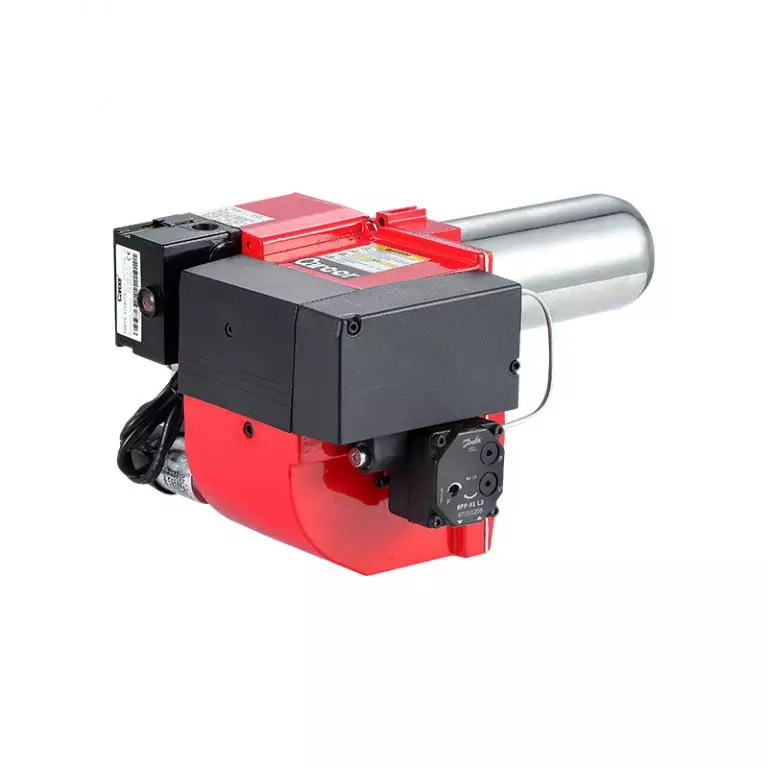
Choosing between oil and gas is not simply a matter of deciding which fuel is cleaner or cheaper. For an industrial heating system, the better option depends on fuel availability, existing infrastructure, production requirements, emissions obligations, and the consequences of an interrupted supply. An oil burner can be the better choice when liquid-fuel security and installation practicality matter more than the operational simplicity of gas.
When an Oil Burner Has the Clearer Advantage
An oil-fired system is particularly attractive where natural gas is unavailable, unreliable, or expensive to connect. A facility does not need to depend entirely on a gas pipeline when an appropriate liquid fuel can be delivered and stored on site.
Fuel autonomy can be valuable for plants where thermal equipment must continue operating despite interruptions to external fuel supplies. Stored oil provides an energy reserve that can be managed according to production requirements rather than relying on continuous pipeline availability.
The case becomes stronger when the facility already has suitable tanks, pumps, fuel lines, and combustion equipment. Replacing a functioning oil system simply to adopt gas can introduce additional engineering work and capital expenditure that may not produce a compelling operational return.
Fuel Security Can Outweigh Gas Convenience
Gas has a straightforward advantage when a reliable pipeline connection already exists. It generally eliminates on-site liquid-fuel storage and the associated delivery arrangements. For a facility with dependable gas infrastructure, those practical benefits can be significant.
Conditions change considerably at remote industrial sites or locations where gas availability is constrained. A diesel burner can operate from stored liquid fuel, giving the facility greater control over its immediate fuel inventory.
Storage does introduce additional responsibilities. Tank condition, fuel cleanliness, filtration, delivery scheduling, and leak prevention become part of routine operation. Consequently, oil makes the most sense when the value of fuel independence justifies those requirements.
Existing Oil-Fired Equipment Changes the Decision
Conversion economics should be examined before selecting a new fuel. An existing furnace, boiler, oven, dryer, or hot-air generator may already be configured for liquid-fuel combustion. Retaining that basic architecture can reduce the scope of a burner replacement project.
Career Burner’s oil-burner range illustrates the range available for such installations. Its light-oil products use diesel, kerosene, and Bio 10 oil and cover stated output capacities from 24 kW to 1,416 kW. The range also includes single-stage, two-stage, on-off, and modulation-control configurations.
A light oil burner therefore does not automatically mean a basic or inflexible heating arrangement. Control selection can be matched to the thermal demand, while the surrounding process equipment remains substantially unchanged where the existing installation permits it.
Operating Requirements Can Favor Liquid Fuel
Process duty can also influence the choice. Industrial heating equipment rarely operates under identical conditions throughout the production cycle. Some systems require steady firing, while others experience changing heat demand.
Burner control should consequently be considered alongside fuel choice. Career Burner’s product information identifies options including single-stage and two-stage regulation and modulation control across its oil-burner collection.
Fuel characteristics and combustion equipment must still be matched correctly. A diesel burner relies on proper atomization, fuel delivery, ignition, and air adjustment. Maintenance therefore includes attention to components such as filters and atomizing equipment.
The CX14 provides a concrete example from the manufacturer’s range. Its published output is 89–172 kW, with oil consumption of 7.5–14.5 kg/h; the stated fuel-consumption range depends on furnace pressure.
When Gas Is Still the Better Choice
Gas remains the stronger option when pipeline infrastructure is already available and reliable, particularly where fuel storage would add unnecessary complexity. The comparison also shifts toward gas where emissions requirements are demanding.
Career Burner’s gas-versus-diesel guidance states that gas generally produces less particulate matter and sulfur oxides and can achieve lower nitrogen oxide emissions when paired with modern low-NOx combustion technology. Diesel combustion can produce higher NOx and particulate emissions, making local environmental requirements an essential part of the decision.
Maintenance requirements can also favor gas. Liquid-fuel systems require attention to filters, nozzles, pumps, and storage equipment, whereas gas systems generally have a simpler fuel-delivery arrangement.
Choose According to the Site, Not the Fuel Alone
The most useful decision rule is straightforward: oil is better when fuel security, existing liquid-fuel infrastructure, or difficult gas access outweigh the advantages of gas; gas is better when reliable supply, simpler fuel handling, and strict emissions requirements dominate.
Prioritizing facility parameters over fuel preference is essential when selecting a Career Burner for a given site. Engineering evaluations must encompass infrastructure availability, incumbent thermal equipment, targeted firing capacities, automation strategies, maintenance overhead, and emissions boundaries.
The debate between oil and gas combustion is not about universal supremacy, but rather about site suitability. Oil stands out when fuel stockpiling guarantees independence and legacy systems offer economic retention. Meanwhile, gas presents the superior engineering pathway where utility access streamlines fuel management and satisfies strict environmental standards.